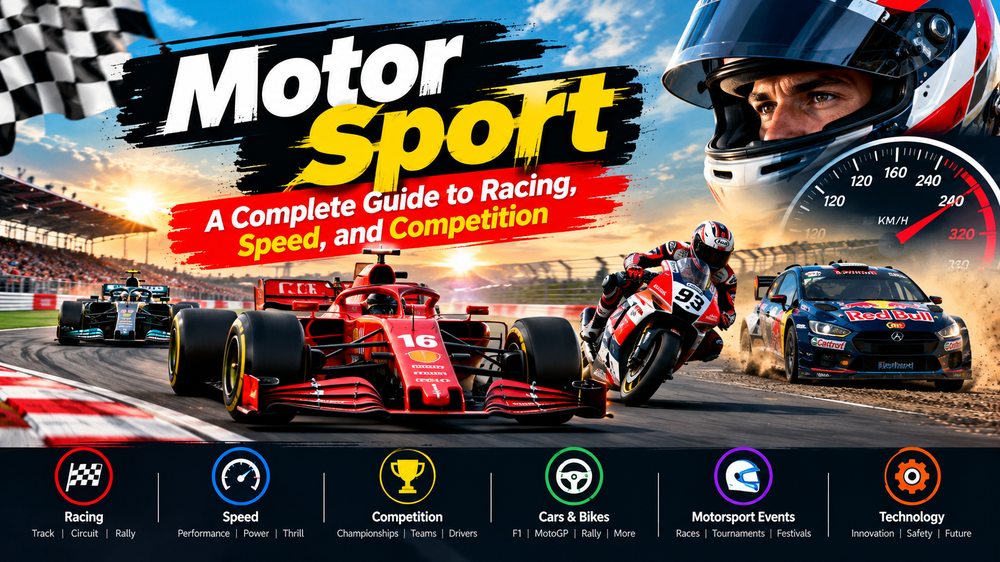
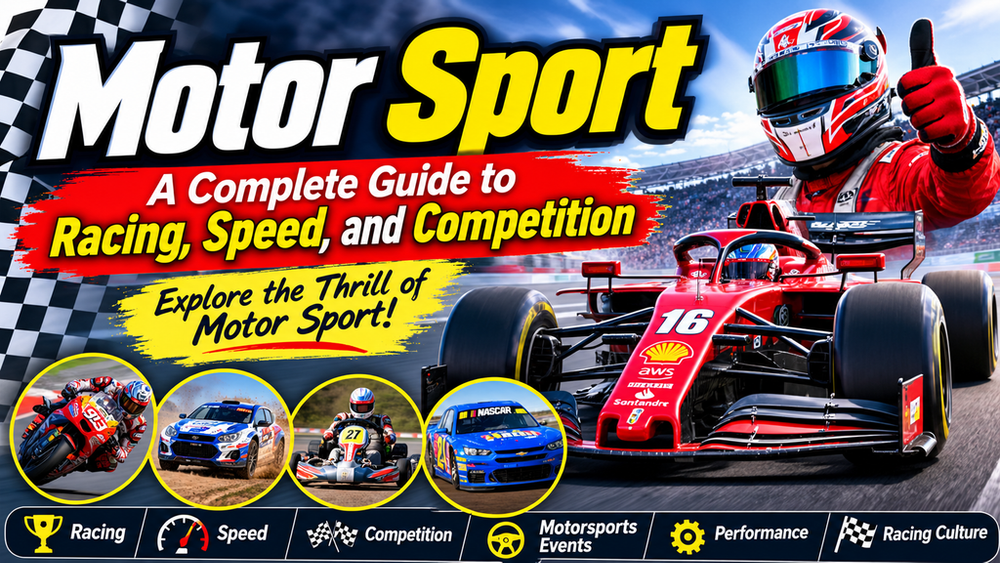
Motor Sport: A Complete Guide to Racing, Speed, and Competition
Introduction to Motor Sport
Motor Sport is one of the most exciting and competitive forms of sports in the world. It involves racing vehicles such as cars, motorcycles, trucks, and other motorized machines. Drivers and riders compete against one another on race tracks, public roads, off-road circuits, and specially designed courses. Motor sport combines speed, skill, technology, teamwork, and strategy to create thrilling experiences for competitors and spectators.
Over the years, motor sport has developed into a global industry that attracts millions of fans. From Formula One racing to motorcycle championships and rally competitions, there are many types of events for people to enjoy. Modern motor sport also plays an important role in automotive innovation, helping engineers develop better engines, safety systems, and vehicle performance technologies.
What Is Motor Sport?
Motor sport refers to organized competitive activities involving motorized vehicles. These competitions can take place on paved circuits, dirt tracks, mountain roads, deserts, or other challenging environments. The main objective is usually to complete a race in the shortest time, achieve the highest score, or outperform other competitors under specific rules.
Motor sport requires more than simply driving fast. Successful competitors must understand vehicle handling, braking, acceleration, racing lines, tire performance, and race strategy. They must also remain focused under pressure and make quick decisions in changing conditions.
Different motor sport disciplines require different skills. Circuit racing emphasizes precision and consistency, while rally racing demands adaptability and control on changing surfaces. Motorcycle racing requires exceptional balance and coordination, whereas endurance racing tests concentration, reliability, and teamwork over long periods.
Popular Types of Motor Sport
Motor sport includes numerous racing disciplines, each offering a unique experience for participants and fans.
- Formula One: A premier international single-seater car racing championship known for advanced engineering, skilled drivers, and high-speed competition.
- MotoGP: A leading motorcycle racing championship featuring highly specialized racing bikes and professional riders.
- Rally Racing: A form of competition in which drivers navigate challenging routes across gravel, dirt, snow, or asphalt.
- Endurance Racing: Long-distance competitions that test vehicle reliability, driver stamina, and team strategy.
- NASCAR: A popular stock-car racing discipline particularly associated with oval tracks and close competition.
- Drag Racing: A straight-line race in which competitors attempt to cover a short distance faster than their opponents.
- Kart Racing: A competitive entry point for aspiring racers using small, lightweight racing vehicles called karts.
- Off-Road Racing: Competitions involving rugged terrain, dirt tracks, deserts, and obstacles.
- Touring Car Racing: Racing involving modified production-based cars on circuits.
- Electric Motor Sport: Competitions featuring electric-powered vehicles, including electric single-seater racing.
Each discipline has its own rules, vehicle requirements, and competitive challenges.
The History and Evolution of Motor Sport
The history of motor sport began shortly after the invention and development of early automobiles. As motor vehicles became more practical, enthusiasts began organizing competitions to demonstrate their speed, reliability, and engineering capabilities.
Early automobile races often took place on public roads and covered long distances. These events helped manufacturers compare their vehicles and attract public attention. As racing became more popular, dedicated circuits and formal regulations were introduced to improve organization and safety.
During the twentieth century, motor sport expanded significantly. International racing championships attracted professional drivers, major sponsors, and large audiences. Formula One became a major global sporting event, while motorcycle racing, rallying, and endurance competitions developed their own loyal fan bases.
Technology transformed the sport over time. Improvements in aerodynamics, braking systems, tire compounds, engine design, and electronic controls increased performance. Today, digital simulations, advanced data analysis, and hybrid or electric powertrains are influencing how teams prepare for competition.
Essential Skills Required in Motor Sport
Professional motor sport competitors need a combination of physical ability, technical knowledge, and mental strength. Although driving or riding ability is essential, several other skills contribute to success.
Vehicle control: Drivers must control acceleration, braking, steering, and cornering precisely, especially at high speeds.
Concentration: Competitors need to maintain focus throughout races while monitoring other vehicles, track conditions, and race instructions.
Quick decision-making: Racing situations can change in seconds. Competitors must react appropriately to overtaking opportunities, hazards, and changing weather.
Physical fitness: Racing can place considerable demands on the neck, arms, core muscles, and cardiovascular system. Fitness helps competitors maintain control and concentration.
Technical understanding: Knowledge of vehicle setup, tire wear, suspension, and mechanical performance helps drivers communicate effectively with engineers.
Patience and discipline: Successful competitors must follow regulations, avoid unnecessary risks, and make calculated decisions.
Developing these skills takes regular practice, professional coaching, and experience in controlled environments.
The Role of Technology in Motor Sport
Technology is one of the most important elements of modern motor sport. Racing teams invest substantial resources in designing, testing, and improving their vehicles. Even small improvements in performance can make a difference in competitive environments.
Aerodynamics helps vehicles manage airflow, reduce drag, and generate downforce where appropriate. Downforce can improve tire grip and cornering performance, allowing cars to maintain stability through turns.
Engine and powertrain technology also play a major role. Engineers work to improve power delivery, efficiency, and reliability while complying with championship regulations. Hybrid systems and electric motors are increasingly important in several racing categories.
Data analysis allows teams to study lap times, tire temperatures, braking points, fuel consumption, and vehicle behavior. Engineers use this information to adjust setups and develop better strategies.
Simulation technology helps drivers practice virtual circuits and prepare for unfamiliar tracks. It also allows teams to test ideas before using valuable track time.
These developments demonstrate how motor sport can serve as a testing ground for automotive engineering and innovation.
Safety Measures in Motor Sport
Safety is a fundamental part of modern motor sport. Racing involves inherent risks because vehicles may travel at high speeds and competitors operate in demanding environments. Organizers, teams, manufacturers, and governing bodies work together to reduce these risks.
Modern racing vehicles may include protective structures, reinforced cockpits, fire-resistant materials, advanced seat belts, and specialized head-and-neck restraint systems. Helmets and other protective equipment are essential for drivers and riders.
Race circuits use safety barriers, gravel traps, designated escape areas, warning lights, and other protective features. Medical teams, recovery vehicles, and trained marshals are also positioned to respond to incidents.
Before competitions, vehicles undergo technical inspections to verify compliance with applicable safety regulations. Drivers receive briefings about track conditions, flags, and emergency procedures.
Although safety technology has improved considerably, no racing environment is entirely risk-free. Following regulations, maintaining equipment, and using appropriate training are essential for reducing preventable dangers.
The Importance of Teamwork in Motor Sport
Although individual drivers often receive the most attention, motor sport is usually a team effort. Engineers, mechanics, strategists, data specialists, and support staff all contribute to a competitor’s performance.
Mechanics prepare vehicles, inspect components, and perform repairs. Engineers analyze vehicle behavior and recommend setup changes. Strategists evaluate tire choices, pit stops, weather conditions, and the actions of competing teams.
Communication is particularly important during races. Drivers receive information about gaps, hazards, vehicle performance, and strategic decisions through radio systems or other approved methods.
Pit crews also play a crucial role in many racing disciplines. Efficient pit stops can save valuable time, while mistakes may affect a team’s overall result.
Strong teamwork enables competitors to solve problems quickly, maintain vehicle reliability, and make better decisions under pressure.
Benefits of Following Motor Sport
Motor sport offers several benefits to fans, communities, and the automotive industry. For spectators, racing provides entertainment, excitement, and opportunities to appreciate driving talent and engineering achievements.
The sport can inspire young people to study science, technology, engineering, and mathematics. Understanding how racing vehicles work introduces concepts such as aerodynamics, friction, energy efficiency, materials science, and mechanical design.
Motor sport also creates employment opportunities for drivers, engineers, technicians, event organizers, broadcasters, marketers, and hospitality professionals.
Major racing events may attract visitors, support local businesses, and generate tourism revenue. Racing communities also provide opportunities for people with shared interests to connect.
However, these benefits depend on responsible event management, appropriate safety standards, and attention to environmental and community concerns.
Environmental Challenges and the Future of Motor Sport
Environmental sustainability has become an important subject in motor sport. Traditional racing can consume fuel, generate emissions, and require significant transportation and infrastructure resources.
In response, some championships and teams are exploring alternative fuels, hybrid technology, electric vehicles, renewable energy, and more efficient logistics. Organizers are also considering waste reduction and improved resource management.
Electric racing demonstrates how competitive motor sport can showcase battery technology, energy management, and electric powertrain performance. Other racing categories continue to investigate lower-carbon fuels and efficiency improvements.
The future will likely involve a combination of advanced engineering, digital innovation, new powertrain technologies, and stronger sustainability initiatives. However, the direction and pace of change will differ between championships.
These developments create opportunities for motor sport to remain exciting while adapting to changing environmental expectations.
How to Get Started in Motor Sport
People interested in motor sport can begin by learning about different racing disciplines and understanding the rules that govern them. Watching professional races is a useful way to learn about racing lines, overtaking, pit stops, and competition formats.
Karting is a common starting point for aspiring car racers because it helps develop vehicle control and racing awareness. Those interested in motorcycles should seek appropriate rider training and participate only in legal, controlled environments.
Joining a recognized club or racing organization can provide access to coaching, events, and experienced participants. Beginners should research licensing requirements, protective equipment, vehicle inspections, and insurance before entering competitions.
Motor sport can be expensive, so it is important to establish a realistic budget. Costs may include training, equipment, vehicle maintenance, entry fees, transportation, and repairs. Sim racing can also provide an accessible way to learn racing concepts and develop track knowledge.
Above all, beginners should prioritize safety, follow official regulations, and build their skills gradually.
Conclusion
Motor sport is a dynamic world that combines competition, technology, teamwork, and human determination. From Formula One and MotoGP to rally racing, karting, and electric championships, it offers a wide variety of experiences for participants and spectators.
The sport continues to evolve through improvements in vehicle engineering, safety systems, data analysis, and environmental technology. At the same time, successful racing still depends on essential human qualities such as concentration, discipline, adaptability, and teamwork.
Whether someone dreams of becoming a professional driver, wants to understand automotive technology, or simply enjoys watching races, motor sport offers many opportunities to learn and participate. With responsible practices, continued innovation, and a strong commitment to safety, motor sport can remain an influential and exciting part of global sporting culture.